Ask a Balinese cook to name the single most important thing in their kitchen and they will not point to a knife or a wok. They will point to a bowl of fragrant, ochre-coloured paste. This is base genep — literally "complete spice mixture" — and it is the foundation on which almost the entire island cuisine is built. Understand it, and you understand how Bali tastes.
What Goes In
Base genep is a wet paste, ground fresh rather than shaken from a jar. The exact recipe varies from village to village and family to family, but the core cast is remarkably consistent:
- Aromatics — shallots and garlic, in generous quantity;
- The fresh rhizomes — turmeric, ginger, galangal and aromatic kencur;
- Chillies for heat and candlenut for body and richness;
- Coriander seed, black pepper and a whisper of nutmeg or clove;
- Shrimp paste, palm sugar and a little oil to bind it all together.
Ground down and gently fried until the raw edge cooks off and the kitchen fills with its scent, it becomes something far greater than its parts.
Why It Matters
The genius of base genep is that it is a system, not a single flavour. The same base can be pushed in a dozen directions: loosened with stock for a soupy sayur, packed into minced fish for sate lilit, rubbed over a whole duck before it is wrapped and slow-cooked into betutu. One paste, endless dishes. It gives Balinese cooking its unmistakable coherence — that sense that everything on the table belongs to the same island.
The Ritual of the Grind
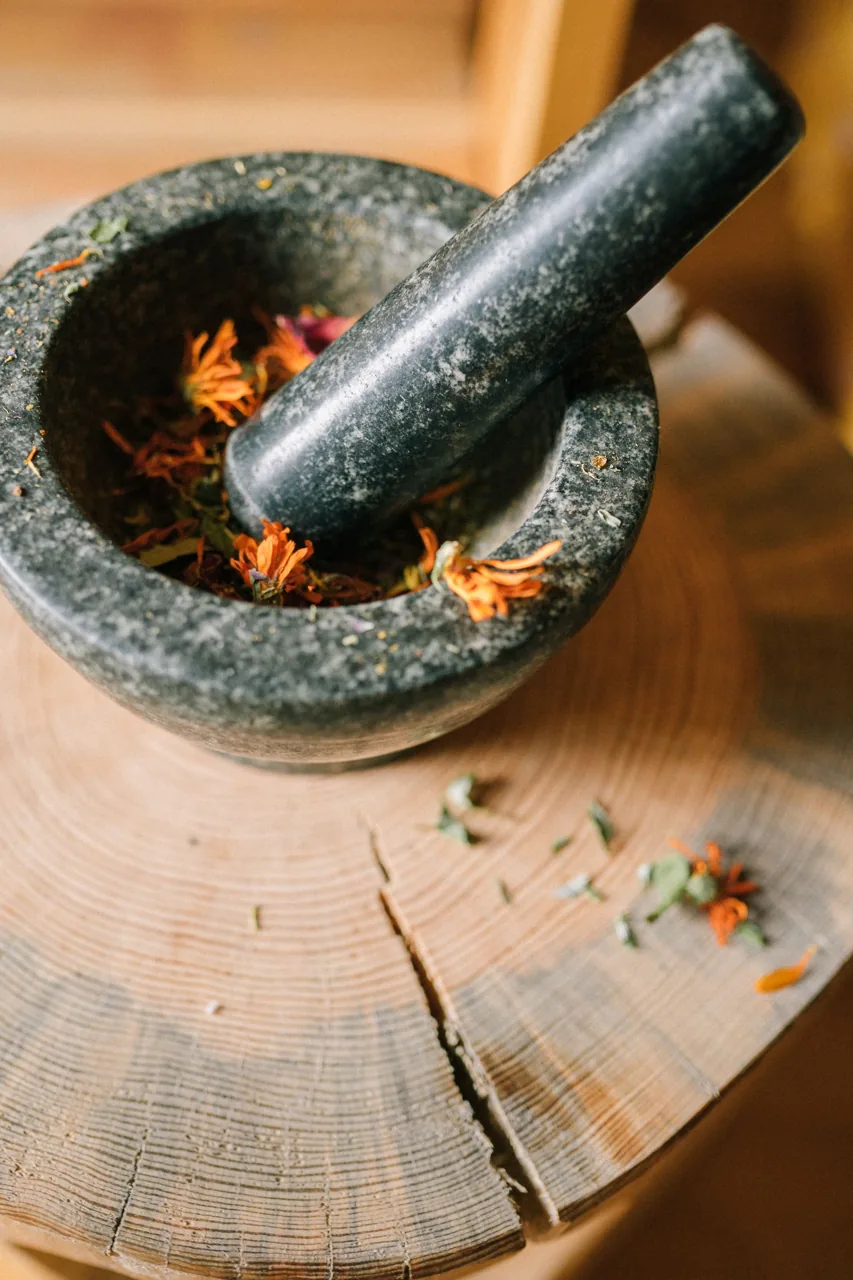
Traditionally the paste is made on a flat stone with a stone pestle, the ingredients added in careful order so each releases its oils properly. It is hard, rhythmic work, and in many households it is still done by hand every morning. That labour is part of the point. A base genep pounded fresh has a brightness that no blender and no shortcut can match — which is exactly why the best Balinese kitchens, from village warungs to villa chefs, still make it the slow way. Taste a dish built on a good one and you will never mistake Balinese food for anything else.