
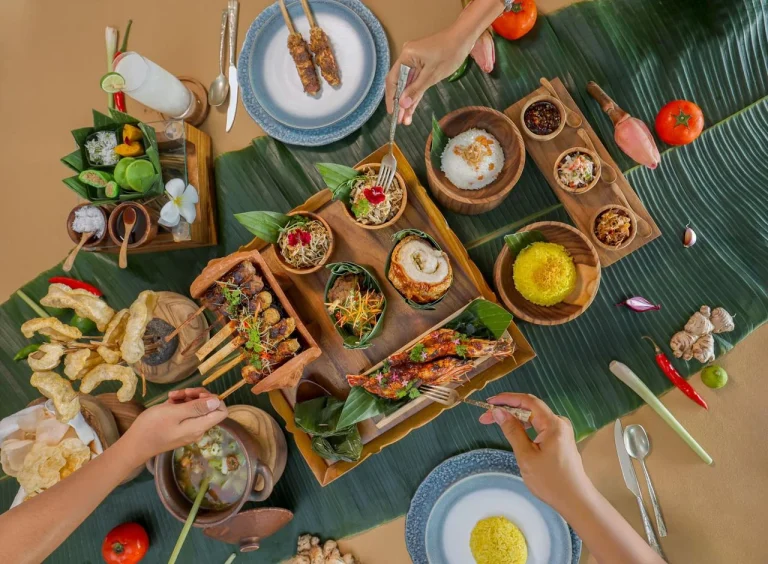
The Megibung: Understanding Bali’s Royal Feast Tradition
To truly understand Balinese culture, you must taste it. One of the most fascinating culinary traditions on the island is the Megibung. Originating from the Karangasem regency, this is not just a meal; it is a symbol of community and equality.
1. A Royal History
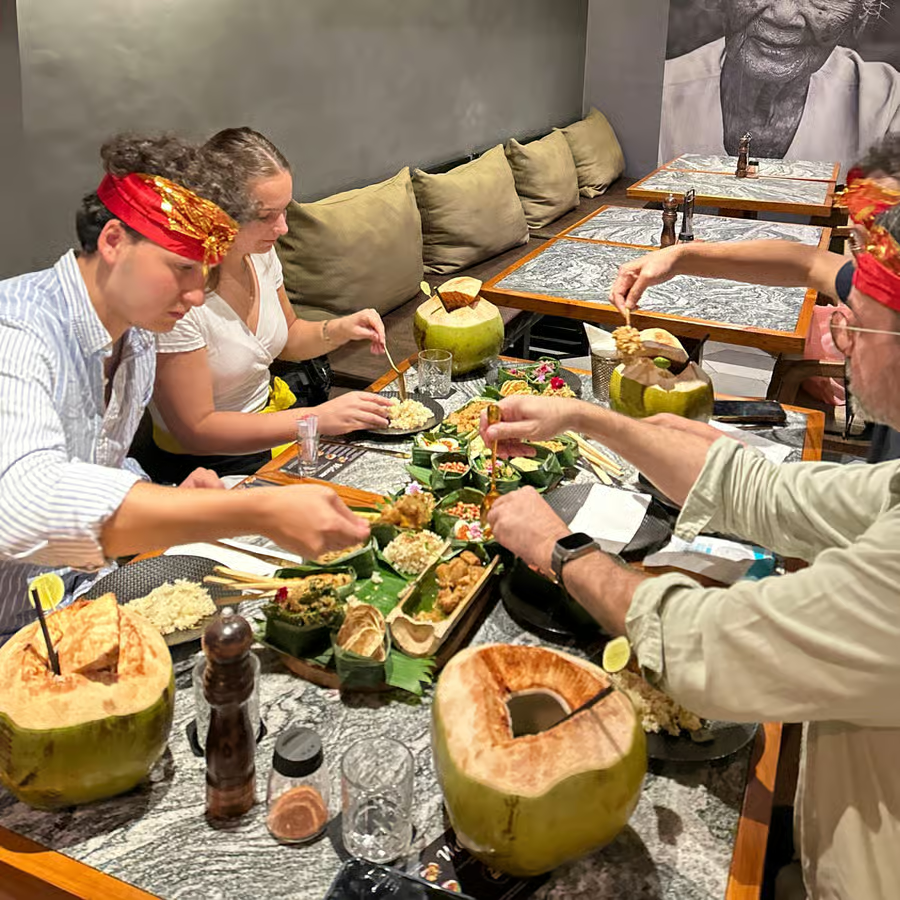
The tradition was started by the King of Karangasem in the 17th century to bond with his soldiers during war. Today, it remains a way for communities to come together during festivals and ceremonies. People sit cross-legged in a circle around a giant mound of rice placed on banana leaves, sharing side dishes of meat and vegetables.
2. The Etiquette of Sharing
Eating Megibung style comes with rules. You must use your right hand only. You should not drop food from your mouth back onto the shared pile. Crucially, you should not finish eating and leave the circle until everyone else is finished. It is a lesson in pacing and mindfulness.
3. Where to Try It
While Megibung is traditionally a ceremony, several high-end Balinese restaurants now offer an “Epicurean” version of this feast. It is a fantastic way to sample dozens of local flavors—from Lawar (spiced mince) to Sate Lilit (minced fish satay)—in a single sitting.